On a dark and cold night in Donetsk in eastern Ukraine, the netting protecting the road from attacks by explosive drones shimmered and rippled in the headlights of our armoured Toyota Land Cruiser, as we drove down strange and surreal tunnels to get in and out of the most intensive area of fighting in eastern Ukraine. The nets go on for miles, suspended from wooden poles around 20ft high along the sides and over the top of the road. Dystopian military vehicles straight out of Mad Max rumble past, encased in their own cages of steel and netting.
Nets snag the propellers of attacking drones, making them a cheap and surprisingly effective physical barrier. Even if their Russian controllers detonate the charge they carry, there is a chance that the explosion will not be close enough to kill people using the road in civilian buses and cars as well as military vehicles.
Much of the netting has been donated by European fishermen. Only this week the Scottish government announced it was sending over another 280 tonnes of salmon nets that were about to be recycled. Before any of it gets used, the Ukrainian military crashes drones into it to test its strength.
The three most feared letters on the battlefield are FPV, standing for “first-person view.” FPV drones are major killers, used by both Ukraine and Russia. They have cameras that feed information back to their controllers in a command centre that might be 30 or 40km away. We visited a few of them, hidden away in basements of wrecked buildings or nondescript village houses.
Inside there are banks of screens, relaying video and data from drones that is analysed by the Ukrainian military’s leading-edge software. The cameras zoom in on small figures of soldiers moving around the ruins, with the controllers directing the men on the ground through walkie-talkies, callsigns and headsets. We could see the men entering buildings where the drones had seen Russians hiding, and emerging after they had killed them.
Early versions of the drones were controlled by radio signals, but both sides are experts at electronic warfare and quickly found ways to jam them. Now they are mostly controlled by fibre optic cables, so thin that a spool 25km long (that carries data and video) fits into a container built into the drone that is the size of a large bottle of bleach.
Eastern Ukraine used to feel like a throwback to the Western Front in World War One, with trenches and dugouts reinforced against artillery and snipers. After the full-scale invasion four years ago it still, for a while, felt like a 20th Century battlefield. But now drones have transformed the way the war is fought, and armies across the world are watching closely, being forced to change their ideas of how to fight.
The narrow confrontation line that used to exist between the two sides is now extended across a broad swathe of land that both sides call the kill zone, stretching perhaps 20km either side of the forward positions of the two armies. Rear positions for logistics and dealing with casualties that used to be relatively safe are now as lethal as the old front line.
The skies above get saturated with surveillance drones, making movement extremely dangerous. Social media feeds are full of terrifying videos filmed from FPV drones as they swoop into their targets, sometimes chasing down individuals in the open, or even entering buildings, threading their way through rooms and doorways until they find their quarry. The last shot is often of a horrified man about to die.
Artillery and tanks are still formidable weapons. But a drone that costs around a thousand dollars can, in the hands of a skilled pilot, destroy a tank that costs $30m (£22m). The Wall St Journal recently reported that a small group of Ukrainian drone pilots created havoc when they were invited to oppose Nato forces in an exercise in Estonia last year. Nato has a lot of catching up to do. One major consequence of the last four years of war is that Ukraine and Russia are now the most experienced and proficient practitioners of drone warfare in the world.
Both countries are constantly innovating to get ahead in the drone war. Both have been using Starlink system owned by the world’s richest man, Elon Musk for battlefield communications and navigation. The Russians had a recent setback when Musk agreed to turn off Russian-registered terminals active inside Ukraine. That seems to be a major reason why Ukraine, with an active Starlink system funded by Poland, recently recaptured territory in the south.
But all the Ukrainian drone units I visited believed that the Russians would soon find a workaround. They respect the skills of the elite Russian drone units they said were called Rubicon and Day of Judgement.
A senior officer told me that western Europeans need to forget the military blunders Russia made after the full-scale invasion four years ago and make a distinction between the thousands of front-line Russian soldiers who are killed every month and the elite drone units that Moscow values as a key part of their war effort. He said they were “cherished” by the Russian army.
On my most recent visit to Ukraine, the threat from drones meant we watched the weather forecast closely before heading into Donetsk, postponing during a day of clear blue skies and waiting for more snow. Drones struggle in bad weather.
Feeling a little reassured by the nets and the snow, we headed towards the town of Slovyansk, past the ruined shells of buildings destroyed over the last four years. Slovyansk functions as a town, just about, with some cafes and shops open. But thousands of residents have moved to safer places, and when the people who have stayed go out, their fear of Russian FPV drones means they hurry down the icy, snow-covered streets to get through their errands to make it home alive. Nets are going up in the town centre.
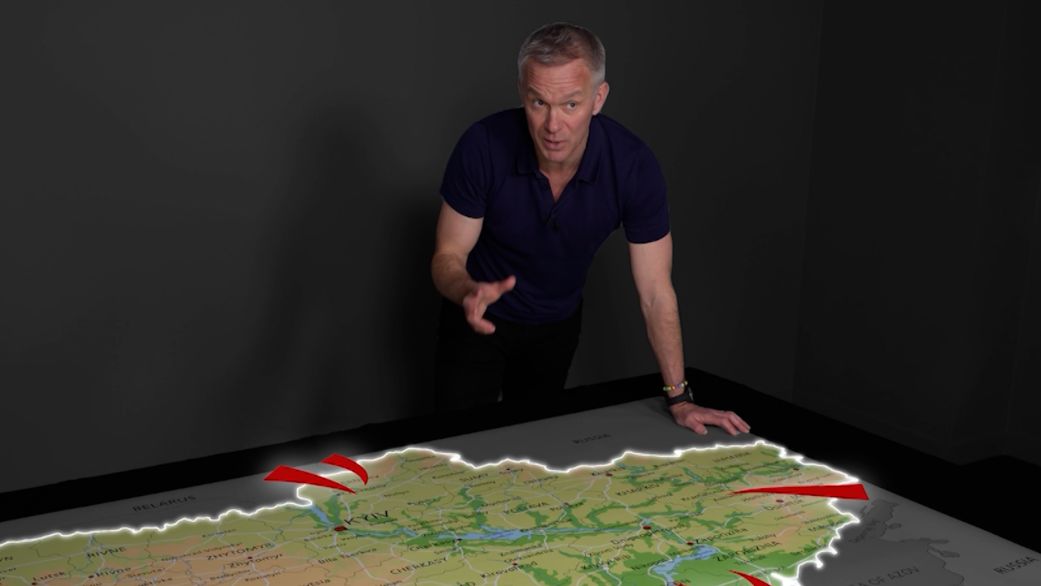
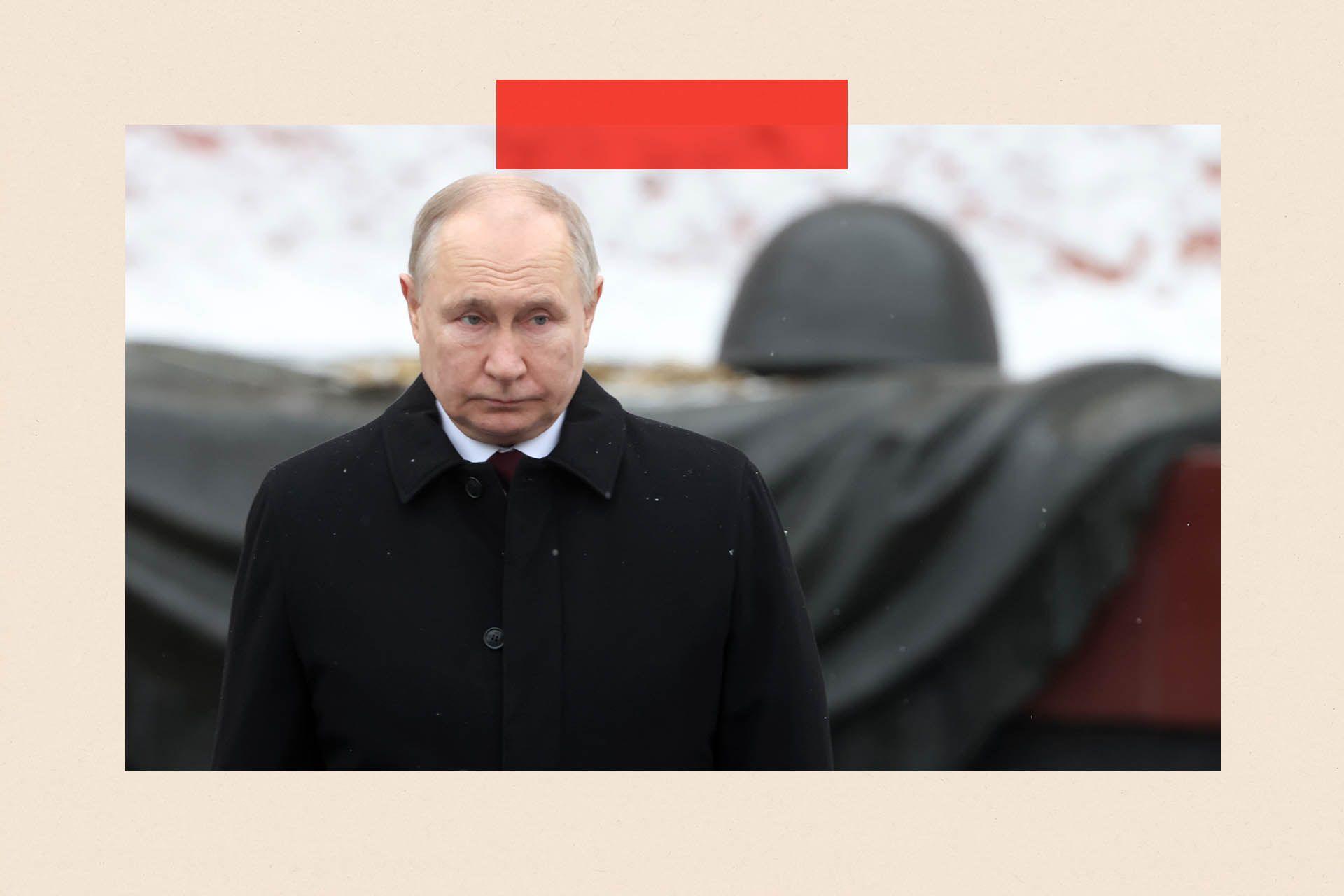
Slovyansk is high on Russian President Vladimir Putin’s uncompromising list of terms for a ceasefire. A big part of the price he is demanding is for Ukraine to give up the 20% or so of Donetsk it still controls, along with other land that his army has been unable to capture, in the southern regions of Zaporizhzhia and Kherson. According to Ukranian President Volodymyr Zelensky, the Americans have pushed him to take the deal, to get to a ceasefire by the summer.
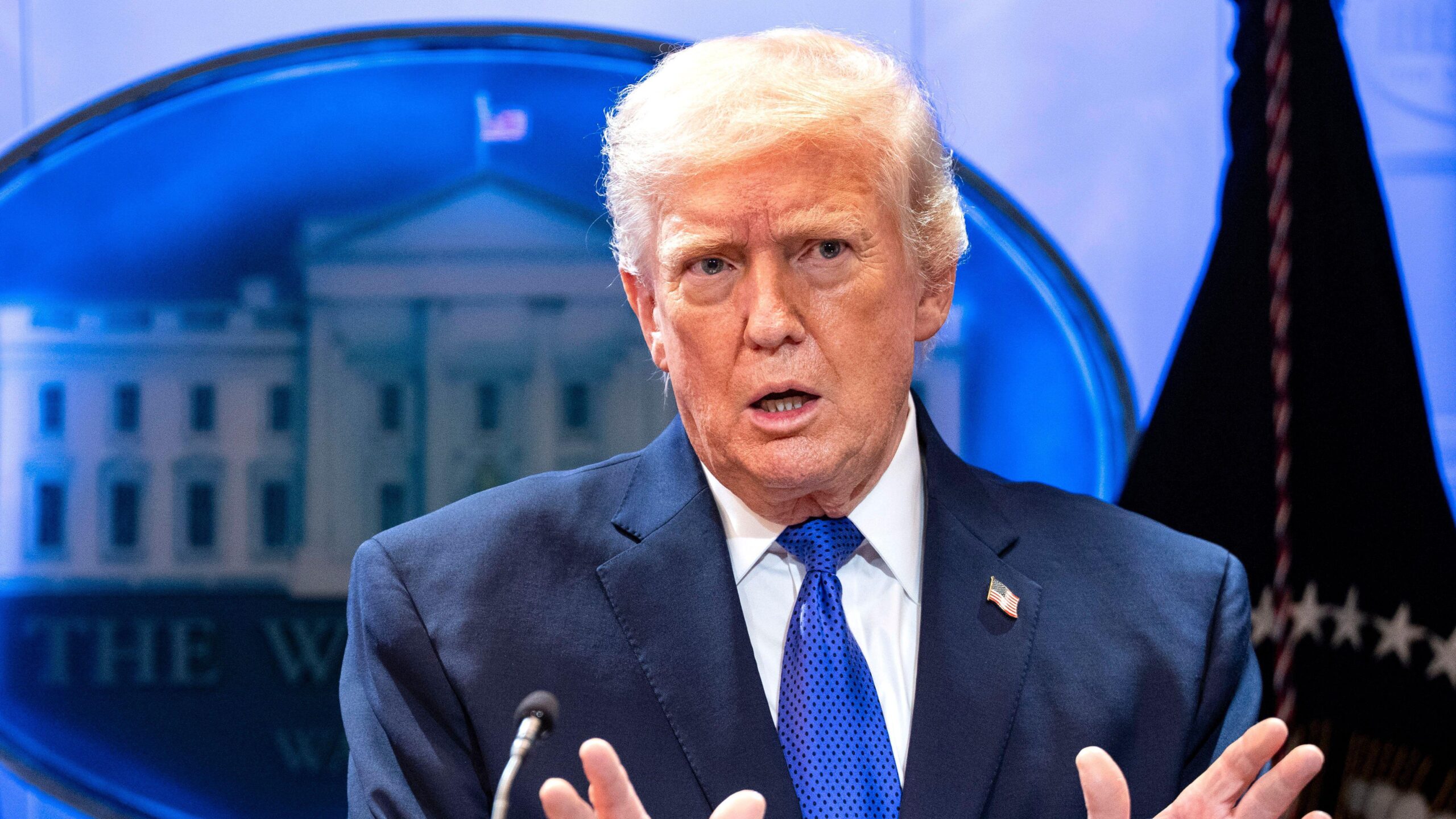
US President Donald Trump also wants Zelensky to call an election, a demand he has not directed at Putin. The evidence suggests that Trump wants to be able to declare he has ended the war. Even if a ceasefire didn’t last, he would treat it as a victory he will take into the US mid-term elections next autumn. He is also eyeing huge business deals with Russia, which cannot happen until sanctions are lifted.
The Americans have tried to impose deadlines for a deal. Most recently they told Zelensky he needed to agree to a ceasefire by the summer that Donald Trump could concentrate on the mid-terms. The US inability to bend Ukraine – or Russia – to its will shows that its leverage has limits. Four years after Russia’s full scale invasion, there is no discernible evidence that a genuine ceasefire is coming .
The dangers in Donetsk
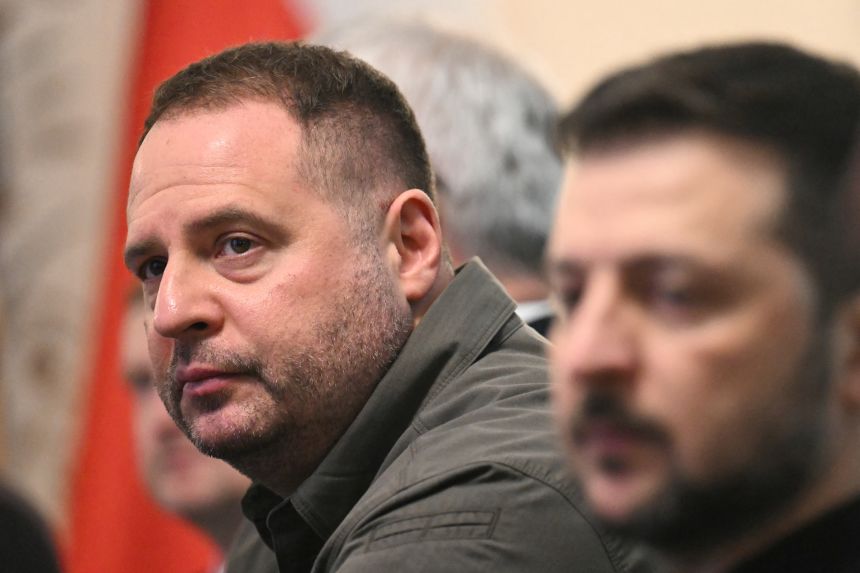
When I saw President Zelensky this weekend in Kyiv, he told me that he could never give up land that Russia has not been able to capture. He would never, he said, abandon the people there, and even if he was tempted to do so it would not work, as within two years by his reckoning, the Russian military would be ready and reequipped and Putin would order them to attack again.
The first person we visited in Slovyansk was Oleh Tkachenko, a beefy middle-aged pastor who has built up a remarkable relief operation. He is one of the few people outside the military who travel to the most dangerous areas, delivering bread to outlying villages that he makes in his own bakery, which produces 17,000 loaves per week.
After his deliveries he often returns with residents who have had enough of living near the front line. Oleh’s bakery is an oasis of order and warmth in the freezing, snow-covered ruins of an industrial area on the edge of Slovyansk.
The UN World Food Programme helped him re-establish it when he was forced out of his hometown, which is now occupied. He told me that the dangers in Donetsk have multiplied in the last few months as the drone war has intensified.
“The situation has changed radically. There are only very dangerous places and relatively dangerous places. Nowhere is safe in the Donetsk region anymore.”
I asked him whether Zelensky should give in to Russian and American pressure to sacrifice Donetsk for a ceasefire. It was the same question I put to everyone I met in Slovyansk, and it produced the same kind of answer.
“What more does Putin want? This is my Donetsk region. I was born here. My children were born here. I created my family here. And I should leave all that? What for?”
Putin, he said, should not be allowed to take and keep territory that does not belong to Russia.
“We are destroying the values on which this world is built on one person’s whim. Not only will the villain avoid punishment, he [will] also be rewarded? I’m sorry. How many villains like this are there in the world?”
At a coffee bar I met Oleksii Yukov. He runs an organisation called Advis Platsdarm that collects the bodies of dead soldiers from where they were killed, to honour their memory, and before they get a decent burial, identify them to give their families some certainty about them. Oleksii makes no distinctions between dead Russians and dead Ukrainians, but that does not mean he is also prepared to accept Russian domination in Donetsk. Like Oleh, he does not believe promises made by Putin.
“So if a maniac comes to your home and says, “Give me your daughter and I won’t come back,” do you really think that a man like this – who rapes and pillages – is simply going to stop?”
“We all know who the maniacs are, right? It’s horrifying. To give away a part of yourself – or your child – to be torn apart… I don’t understand why this question is even asked of Ukrainians.”
Oleksii has also recovered the remains of soldiers killed in World War Two in the Donbas, the name used for Donetsk and its neighbouring region, Luhansk, which has fallen to Russia in its entirety. He compares Putin’s promises to ones made by Adolf Hitler at the Munich conference in 1938. Hitler claimed that a slice of Czechoslovakia known as the Sudetenland was his last territorial demand in Europe. Britain and France accepted his word as the price of avoiding the World War that started the following year. Like many people in this part of Europe, Oleksii sees parallels with the past.
“Promises made by Russia are worth nothing – just like Hitler’s promises that once he took the Sudetenland nothing else would happen. We all saw what that led to: the Second World War. Now it could lead to a Third World War if we do not stop and tell Putin that people live here – people who want to live in their own country, on their own land. Each of them has that right. No Ukrainian has the right to say we can give anything away.”
Oleksii believes that forcing Ukraine to give up Donetsk without a fight would be as much of a betrayal as Czechoslovakia suffered at Munich.
Along with its embattled neighbour Kramatorsk, Slovyansk is designated as a “fortress city”. Both are protected by miles of deep anti-tank ditches filled with razor wire and concrete anti-tank obstacles known as “dragon’s teeth”. The towns sit on a range of hills that is the last high ground before around 150 miles of flat land, mostly fields, that stretch right up to the next natural obstacle, the mighty Dnieper River that bisects Ukraine from north to south. Ukrainians argue that stopping the Russians if they reached the flatlands would be much harder.
The Beginning
Four years ago, almost to the day, I was at the main railway station in Kyiv, watching a scene straight out of Europe’s dark past play out in a bitter wind off the Ukrainian steppe. Kyiv was in the depths of a frigid winter so monochrome that the scene on the platform could have been an old newsreel, but it was 2022 and happening in a technicolour, digital age. It was the loudest warning yet that the world had changed, that old assumptions about European security and the safety of the future had to be forgotten.
Since then, other warnings have sounded, in the Middle East, in Sudan and in Taiwan, while the war in Ukraine has incubated the biggest crisis in the North Atlantic alliance since it was created in 1949. The gap remains wide between Trump’s openness to Putin and the much harsher view of Moscow held by most European members of Nato.
In that first week of the war, the platforms at Kyiv station were packed, mostly with Ukrainian women and children, desperate to board trains going west to escape the advancing Russian army. Russian artillery and answering salvoes from the Ukrainians echoed around the empty streets of the city centre, making the threat to the city frighteningly real.
Trains pulled in every 15 or 20 minutes, as many as the endlessly enterprising operators of Ukraine’s railway network could find in the sidings and marshalling yards. Frightened people jostled their way on, leaving tearful goodbyes on the platform with those staying to fight. At the height of the evacuation 50,000 people a day were passing through the station.
In the station concourse a young soldier with a Kalashnikov slung across his back was hugging his girlfriend before she left to go west and he went back to his unit. They could have been a Norman Rockwell cover for the Saturday Evening Post, the magazine that cheered on Americans after they entered World War Two.
Zelensky showed immediately that he was an instinctive war leader, a born communicator who was able to rally his people. On the first dark night of the war, dismissing rumours that he had fled, he appeared in olive green military attire, recording a video selfie in front of the presidency building in Kyiv, with his closest advisors behind him.
“We are all here, our soldiers are here, the citizens of the country are here. We are all here protecting our independence, our country and we are going to continue to do so.”
The first months of Russia’s full-scale invasion went by for Ukrainians in waves of fear, determination, grief, and patriotic fervour. Some of the Russian soldiers in towns they had occupied around Kyiv carried out massacres – leaving the bodies sprawled where they had been killed on the highway, on the streets of Bucha and in shallow graves. We saw the bodies after Ukraine forced the Russians to retreat from the capital, a victory that confounded the prediction of their western allies that they would be beaten in a few weeks.
Ukraine’s unexpected strength persuaded the then US President Joe Biden and other European leaders to send more powerful weapons to Kyiv, though never as many or as fast as the Ukrainians wanted. Ukrainians who stayed were volunteering to fight. Those who couldn’t set up workshops that churned out Molotov cocktails and camouflage netting.
Four years on that energy has dissipated. That should not be surprising. War is all-consuming, and exhausting.
It has been replaced by a grim determination to carry on, especially among front line soldiers and their families. Zelensky said earlier this month that 55,000 Ukrainian soldiers have been killed in the last four years, accepting that many more were classified as missing. The real figure is likely to be much higher than 55,000. The chances are that their remains are somewhere along the 800-mile front line.
Recruiting new soldiers to replace them in the terrible danger of the deadly and expanding kill zone on the front lines is a struggle. In the cities and at checkpoints men of military age face snap inspections of their papers. If they are eligible for conscription, and do not have an exemption from service, they can be driven off to the barracks on the spot.
Getting enough soldiers to fight on is one of Ukraine’s greatest challenges, yet polls show substantial majorities here believe that Ukraine can fight on, despite Russian advances on the battlefield, and has no choice as they believe Russia wants to destroy them as a nation. A majority also do not believe that the US-brokered talks will produce a lasting peace. But even though a majority believe Ukraine does not have a choice about fighting on, putting on a uniform and heading for the front line is not a popular choice.
Valeriy Puzik, an author and poet, volunteered to fight and has spent months at the front line. I met him in a trendy bar in Kyiv, a world away from the six metre deep dug out he inhabited with his squad at the front line for more than 100 days. I asked him why it was so hard to recruit.
“Because when a person leaves a position, they don’t say anything positive. And word of mouth does the worst damage. Because, there is nothing positive there. I wouldn’t wish any of my friends to crawl into a burrow and sit there… I was lucky to survive. Usually, people sit in those burrows for 90, 100, 160 days. We were basically supposed to stay there until spring.”
Valeriy survived his latest deployment to the front because he volunteered to evacuate two wounded comrades.
Before he could be sent back, his old position was attacked and the men who stayed behind, he says, were killed or are missing. Evacuating the wounded men, he believes, saved his life.
“If it weren’t for those injuries, most likely we all would have died there.”