As the Champions League moves into its most decisive stretch, all eyes turn to Nyon. Friday, 27 February, brings one of the most important moments of the season: the draw that maps out the road to Budapest, revealing every possible twist from the round of 16 through to the semi finals. For 16 clubs, it’s the moment the path opens—or closes—towards the final on 30 May.
The draw takes place at 12pm CET at the House of European Football in Switzerland and will be streamed live on supersport.com, SuperSportTV, and the SuperSport app.
WHO’S IN THE DRAW?
With the knockout round play offs wrapped up on Wednesday night, the Champions League has its final 16. As always, the teams fall into two pots: the league phase top eight (seeded) and the play off winners (unseeded).
SEEDED (LEAGUE PHASE TOP EIGHT)
1. Arsenal (ENG)
2. Bayern München (GER)
3. Liverpool (ENG)
4. Tottenham (ENG)
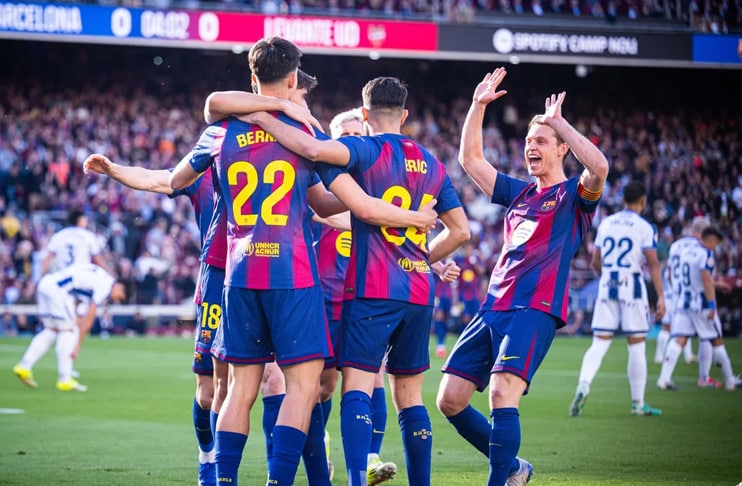
5. Barcelona (ESP)
6. Chelsea (ENG)
7. Sporting CP (POR)
8. Manchester City (ENG)
Unseeded (Knockout Phase Play Off Winners)
– Real Madrid (ESP)
– Paris (FRA)
– Newcastle (ENG)
– Atlético Madrid (ESP)
– Atalanta (ITA)
– Bayer Leverkusen (GER)
– Galatasaray (TUR)
– Bodø/Glimt (NOR)
It’s a fascinating mix: European royalty, clubs in resurgent form, serial knockout specialists—and in Bodø/Glimt, a Norwegian side that continues to defy the competition’s hierarchy.
HOW THE DRAW WORKS
UEFA’s revamped Champions League format means the draw now places all remaining rounds—round of 16, quarter finals, and semi finals—into one bracket, similar to major international tournaments.
HERE’S HOW IT UNFOLDS:
1. Seeding Rules
– The top eight from the league phase are seeded.
– They are matched with the winners of the knockout phase play offs (unseeded teams).
– Seeding pairs follow league phase finishing positions: 1 v 2, 3 v 4, 5 v 6, 7 v 8.
2. Four Bowls, Four Seeded Pairs
– Each seeded pair goes into its own bowl, and teams are drawn to determine their exact placement in the bracket.
– The draw starts with the pair ranked 7/8,
– Then moves upward to the pair ranked 1/2.
– The first name drawn from each bowl is assigned to the silver side of the bracket, and their partner goes to the blue side.
– Once the seeds are placed, their opponents (the unseeded playoff winners) slot in automatically based on positions defined in the earlier playoff draw.
– This process doesn’t just confirm the round of 16 fixtures—it locks in the entire knockout journey up to the final.
HOW THE QUARTERFINALS AND SEMIFINALS ARE SET
Because the bracket is established during Friday’s draw:
Teams know exactly who awaits them in the quarterfinals and semifinals, depending on who advances.
There is no separate draw for the last eight or last four.
As usual, the bottom side of each pairing will host the second leg.
The only exception is the final, where the winner of the silver side semifinal will be designated the nominal “home” team.
And yes—clubs from the same country can meet at any stage from the round of 16 onward. Familiar foes could collide again.
KEY DATES FOR THE KNOCKOUT PHASE
Mark your calendars. The road to Budapest unfolds as follows:
– Round of 16: 10/11 & 17/18 March 2026
– Quarterfinals: 7/8 & 14/15 April 2026
– Semifinals: 28/29 April & 5/6 May 2026
– Final (Budapest): 30 May 2026
UEFA’s match calendar regulations ensure a balance in scheduling—typically one match per team on Tuesday and one on Wednesday—while also allowing UEFA to adjust fixtures when two clubs from the same city are involved or when logistical complications arise.
THE DETAILED SCHEDULES WILL DROP AS FOLLOWS:
– Round of 16 fixtures: Available on the night of the draw.
– Quarterfinal fixtures: Released on 19 March.
– Semifinal fixtures: Released on 16 April.
A Draw That Shapes the Future
Friday’s draw is more than a formality—it’s the moment that shapes the destiny of Europe’s biggest clubs. For some, it will deliver a hopeful route. For others, a mountain to climb. And for the rest of us, it marks the point where the Champions League shifts from theory to pure theatre.